

Once upon a time, coffee came from dirt, fire, and mild human incompetence. Now? It comes with algorithms. From muddy farms to your smug, perfectly foamed latte, AI has elbowed its way into every step of the coffee journey. It doesn’t wear an apron, but rest assured - it thinks it knows better than everyone who does.
Farming & Production
Coffee farming has officially abandoned instinct and vibes. Companies like Ebru Coffee now deploy AI to analyse soil health, rainfall, temperature swings, and pest activity, meaning farmers can stop staring at the sky and start staring at dashboards. Meanwhile, startups such as Demetria and LightLabs have produced handheld devices that scan coffee beans using near-infrared light and machine learning. These gadgets create chemical “fingerprints” in seconds, telling you whether a bean is brilliant or rubbish - without a single person dramatically slurping from a spoon.
Roasting
This is where things get controversial. Roasting, once a dark art practiced by people who looked permanently stressed, is now being handled by machines that can listen. AI-powered roasters from Aillio and Ansa use microphones and sensors to detect the infamous “first crack” with unnerving accuracy - often better than the humans who’ve been doing it for decades. Over time, the machines learn from thousands of roasts, quietly perfecting profiles while the roaster stands there wondering when it all went so wrong.
Retail & Service
And yes, the robots are here. In places like Cafe X in San Francisco and Briggo (now owned by Costa Coffee), robotic baristas churn out up to 120 drinks an hour. They take orders, steam milk, pull espresso shots, make latte art, and clean up after themselves. They do not flirt. They do not complain. They do convert you to socialist ideology. Frankly, it’s unsettling.
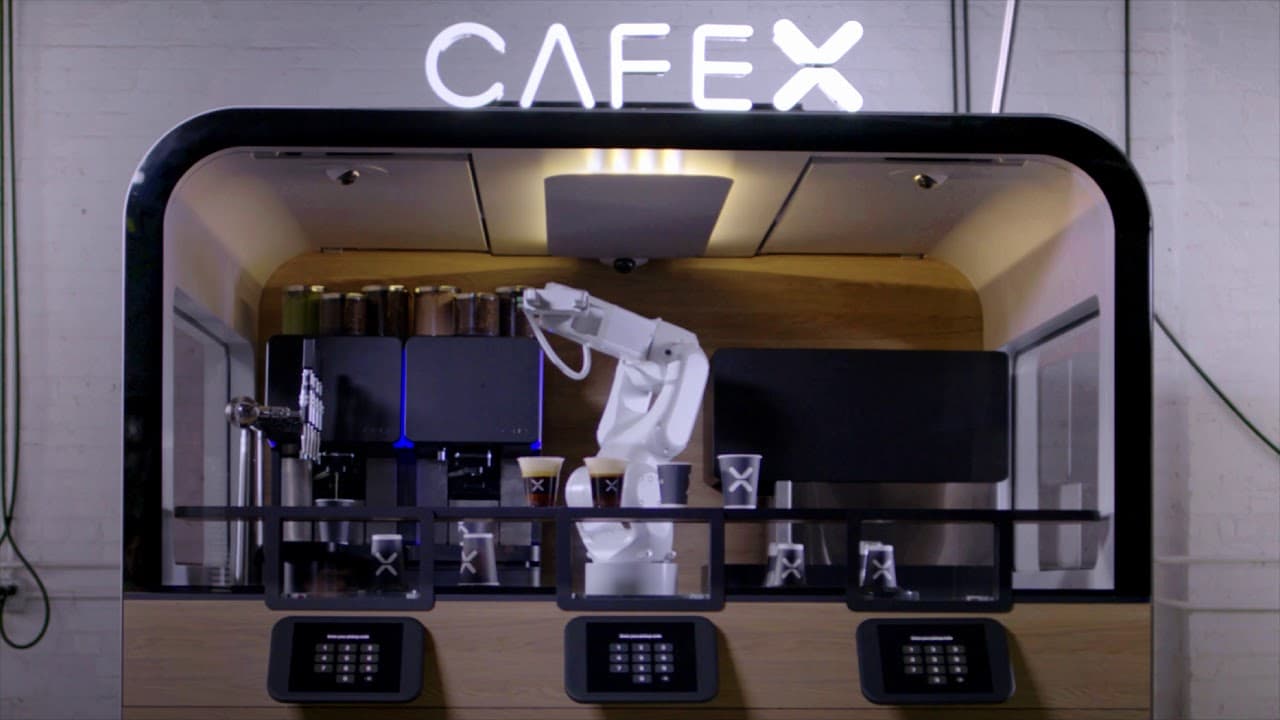
And yes, the robots are here. In places like Cafe X in San Francisco and Briggo (now owned by Costa Coffee), robotic baristas churn out up to 120 drinks an hour. They take orders, steam milk, pull espresso shots, make latte art, and clean up after themselves. They do not flirt. They do not complain. They do convert you to socialist ideology. Frankly, it’s unsettling.
Supply Chain & Inventory
AI is also saving coffee companies from themselves. Blue Bottle Coffee, for example, uses AI to analyse historical sales, seasonal patterns, and external factors like weather to predict demand. The result? Fewer wasted beans, fewer empty shelves, and far fewer tragic moments where someone says, “Sorry, we’re out of cold brew,” and ruins your entire morning.
Personalisation
Your coffee is now as curated as your streaming recommendations. Companies like Trade Coffee and Bean Box use AI to study your preferences, ratings, and buying habits to recommend beans and brewing methods tailored specifically to you. Whether you enjoy something “bright and fruity” or “dark and aggressively miserable,” AI has decided - and it’s probably right.
Sustainability
Even guilt has been optimised. AI-powered sensors monitor water and energy use across farms and roasteries, cutting waste and improving efficiency, as noted by Office-Coffee. Meanwhile, AI models calculate carbon footprints, optimise logistics, and highlight sustainability gaps. Because nothing says environmental responsibility like a flat white produced by a small army of computers.
Big Business, Big Questions
Naturally, this is big money. The AI in food and beverage market is expected to balloon from $13.39 billion in 2025 to $67.73 billion by 2030. But not everyone is thrilled. 79% of processors say cost is a major barrier, and there’s a growing concern that too much automation might bulldoze coffee’s long-standing traditions of craftsmanship, skill, and actual human beings doing things.
Bottom line
AI isn’t replacing coffee culture - it’s giving it a software update. The trick now is making sure the future of coffee still tastes human… even if it was roasted, brewed, and served by something that doesn’t blink.